
What Does a Planer Do? A Beginner-Friendly Guide
Learn what a planer does, how it works, and why it’s such a useful tool for smoothing rough lumber, reducing board thickness, and creating more consistent woodworking stock.
CARPENTRY
4/8/20264 min read
Disclosure: This post may contain affiliate links. As an Amazon Associate we earn from qualifying purchases.
If you’re getting into carpentry or woodworking, a planer is one of those tools you’ll hear about pretty quickly. A lot of beginners know it has something to do with smoothing boards, but they’re not always sure what it actually does or when to use one.
The simple answer is this:
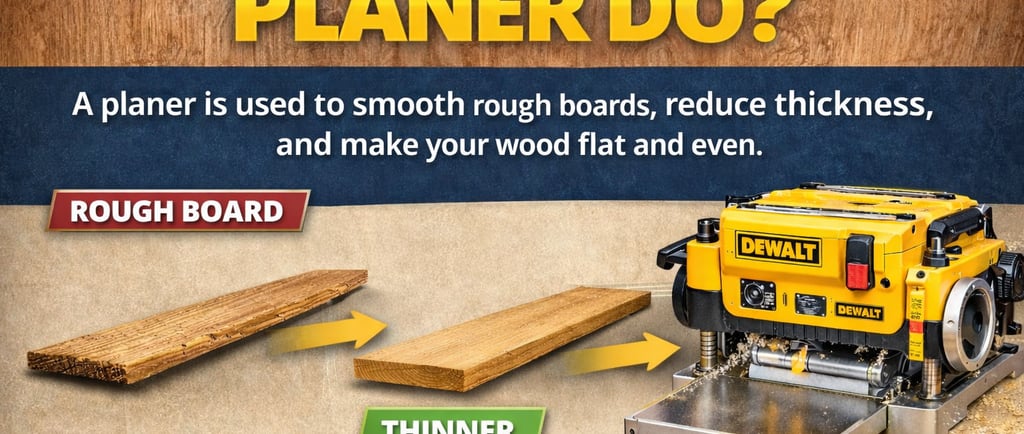
A planer is used to make a board thinner, smoother, and more consistent in thickness.
It’s a really useful tool when you’re working with rough lumber, reclaimed wood, or boards that need to be cleaned up and brought to a more uniform size.
What a Planer Actually Does
A planer removes material from the surface of a board using spinning cutter knives.
As the board feeds through the machine, the cutter head shaves off a thin layer of wood. That process helps:
• smooth the surface
• reduce thickness
• make the board more uniform from end to end
So if you start with a rough, uneven board, a planer helps turn it into something cleaner and more usable.
What a Planer Is Best For
A planer is great for:
• smoothing rough lumber
• reducing board thickness
• making multiple boards the same thickness
• cleaning up reclaimed wood
• improving surface finish before final sanding
This is especially helpful if you buy rough-sawn lumber and want to prep it yourself instead of paying extra for already surfaced boards.
What a Planer Does Not Do
This part is important, because a lot of beginners confuse a planer with a jointer.
A planer does not automatically flatten a warped or twisted board correctly on its own.
A planer follows the board as it feeds through. If a board is badly twisted, bowed, or cupped, a planer alone is not always the right first step.
In general:
• a jointer helps create one flat face
• a planer makes the opposite face parallel and brings the board to final thickness
That’s why jointers and planers are often used together.
How the Process Works
Here’s the basic idea:
1. You feed the board into the planer
The feed rollers pull the board through the machine.
2. The cutter head removes material
Rotating knives shave a thin amount of wood off the surface.
3. The board comes out smoother and thinner
Each pass removes a little more material until you reach the finish and thickness you want.
That’s why planers are usually used in multiple light passes instead of trying to remove too much at once.
Why a Planer Is Useful
A planer can make a big difference in how your material looks and feels.
Instead of working with rough boards that are uneven and inconsistent, you can end up with stock that is:
• smoother
• more uniform
• easier to measure
• easier to join
• better for final projects
That’s a big deal if you’re building furniture, shelves, cabinets, trim pieces, or other woodworking projects where consistency matters.
Common Planer Benefits
Smoother wood surface
A planer helps clean up rough or fuzzy lumber and gives you a better starting point for sanding and finishing.
More consistent thickness
This is one of the biggest benefits. If you need several boards to match, a planer helps you get there.
Better project results
When your wood stock is more consistent, it usually makes assembly, fitting, and finishing easier.
More control over your lumber
Instead of being stuck with whatever thickness the board already is, you can size it closer to what your project needs.
Common Beginner Mistake
One of the biggest mistakes beginners make is trying to remove too much wood in one pass.
That can lead to:
• rougher cuts
• more strain on the machine
• poor finish
• tear-out
• extra wear on the planer
A planer usually works better when you take light passes and sneak up on the final thickness.
Another Important Thing: Snipe
If you start learning about planers, you’ll probably hear the word snipe.
Snipe is a deeper cut that sometimes happens near the beginning or end of a board as it passes through the planer.
It’s one of the most common frustrations with benchtop planers. Infeed and outfeed support, proper board handling, and good setup can help reduce it.
What Kind of Woodworking Projects Use a Planer?
A planer is useful for all kinds of work, including:
• furniture building
• cabinet projects
• shelving
• table tops
• trim work
• reclaimed wood projects
• shop furniture
• general carpentry
If you work with rough lumber often, a planer can become one of the most valuable tools in the shop.
Planer vs Sander
A planer and sander are not the same thing.
A sander smooths the surface, but it does not do a great job of accurately reducing thickness the way a planer does.
A planer is meant to actually remove material in a controlled way so the board ends up more uniform.
That’s why a planer is more of a stock-prep tool, while a sander is more of a finish-prep tool.
Is a Planer Worth It?
If you mostly buy already finished boards from the store and only do occasional simple projects, you may not need one right away.
But if you want to:
• work with rough lumber
• improve surface quality
• control board thickness
• get more serious about woodworking
then a planer can absolutely be worth it.
It opens up a lot more flexibility and gives you more control over your material.
Final Thoughts
A planer is used to make boards smoother, thinner, and more consistent in thickness. It’s one of the most useful woodworking tools for preparing rough lumber and improving material before a project goes together.
If you’re getting into woodworking or carpentry, understanding what a planer does is a big step toward knowing when you need one and how it fits into the process.
Recommended Tool
If you’re looking for a planer that offers strong performance, good finish quality, and useful features for a benchtop setup, check out our recommended thickness planer on Amazon. It’s a great option for anyone wanting to step up their woodworking setup and get cleaner, more consistent boards for projects.
Help
Questions? Reach out anytime, we’re here.
Contact
© 2026. All rights reserved.