
Electrical Wire Colors Explained
How to identify what each wire does
EDUCATIONAL
4/1/20264 min read
Disclosure: This post may contain affiliate links. As an Amazon Associate we earn from qualifying purchases.
If you’ve ever opened an electrical box or looked behind an outlet, you’ve probably noticed that the wires inside are different colors. These colors aren’t random — they follow a system designed to help electricians quickly identify what each wire does.
Understanding electrical wire colors can help homeowners safely identify basic wiring components and better understand how electricity flows through their home.
In this guide, we’ll break down the most common electrical wire colors used in residential wiring and explain what each one is typically used for.
Why Wire Colors Matter
Electrical wiring uses color coding to identify the function of each conductor. This system helps prevent wiring mistakes and makes electrical troubleshooting much easier.
In most residential electrical systems in the United States, wiring follows guidelines based on the National Electrical Code (NEC).
While exact wiring setups can vary depending on the installation, these colors generally represent specific roles within a circuit.
The three most important types of wires in a standard circuit are:
• Hot wires
• Neutral wires
• Ground wires
Each plays a critical role in delivering electricity safely throughout your home.
Black Wires – Hot Wires
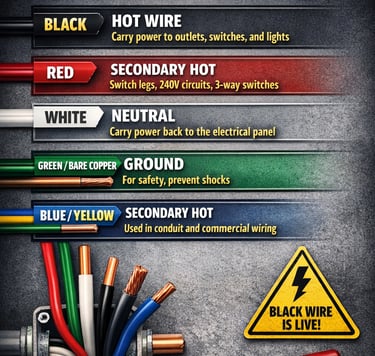
Black wires are typically used as hot wires.
A hot wire carries electrical current from the breaker panel to outlets, switches, and light fixtures. When power is flowing through a circuit, the black wire is usually the conductor delivering that electricity.
Because black wires carry live electrical current, they should always be handled with caution.
You’ll most commonly see black wires used for:
• standard outlets
• lighting circuits
• switches
• appliance connections
If you’re ever working inside an electrical box, always assume a black wire could be energized until verified otherwise.
Red Wires – Secondary Hot Wires
Red wires are also hot wires, but they are typically used for specific situations.
These wires often serve as secondary hot conductors and may appear in circuits that involve multiple switches or higher voltage.
Common uses for red wires include:
• switch legs connecting switches to lights
• 3-way switch systems controlling lights from multiple locations
• 240-volt circuits such as electric dryers or stoves
Because red wires are also hot conductors, they should be treated the same as black wires when working on electrical systems.
White Wires – Neutral Wires
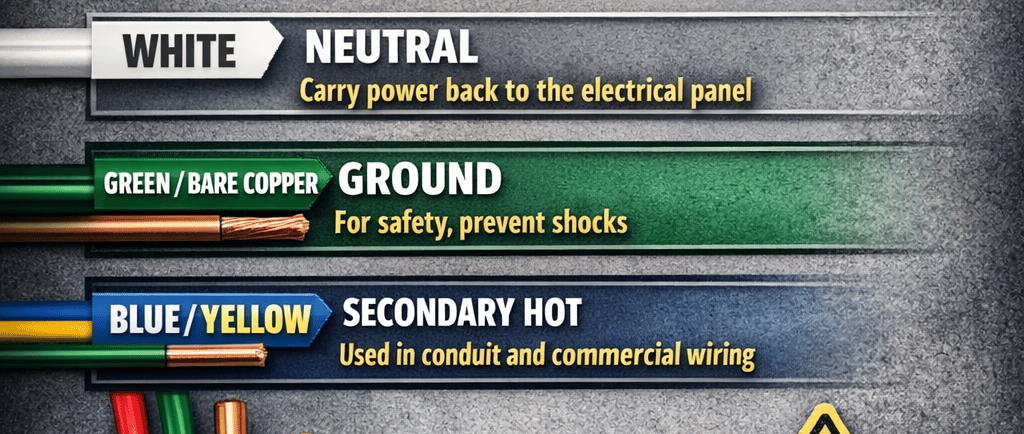
White wires are used as neutral wires.
The neutral wire provides a return path for electrical current, carrying electricity back to the electrical panel after it has passed through a device.
While neutral wires normally don’t carry voltage in the same way hot wires do, they are still part of a live electrical circuit and should never be handled carelessly.
Neutral wires are typically connected to the neutral bus bar inside the electrical panel, completing the circuit.
You’ll usually see white wires connected to:
• outlets
• lighting fixtures
• appliances
• junction boxes
Green or Bare Copper – Ground Wires
Ground wires are used strictly for safety purposes.
These wires are either:
• green insulated wires, or
• bare copper wires
Ground wires provide a safe path for electrical current if a fault occurs. If a hot wire accidentally touches a metal component or electrical box, the ground wire directs the electricity safely back to the panel and helps trip the breaker.
This prevents:
• electric shocks
• damaged equipment
• electrical fires
Ground wires are one of the most important safety features in modern electrical systems.
Blue and Yellow Wires – Additional Hot Wires
Blue and yellow wires are less common in residential wiring but may appear in certain installations.
These wires are typically used as additional hot conductors, especially in conduit wiring systems or commercial electrical installations.
They can serve several purposes depending on the circuit, including:
• switch legs
• lighting circuits
• additional hot conductors in multi-wire systems
Because these wires are also hot conductors, they should always be treated with the same caution as black or red wires.
Important Electrical Safety Tips
Working with electricity can be dangerous if proper precautions are not taken.
Before inspecting or working on any wiring, always follow these safety guidelines:
• Turn off power at the breaker panel
• Verify the circuit is de-energized
• Never assume a wire is safe to touch
• Use proper testing tools before handling wires
Even experienced electricians rely on testing equipment to confirm whether a wire is live.
How Electricians Identify Wires Safely
Professional electricians don’t rely on color alone to identify wiring. Instead, they use electrical testing tools to confirm voltage and verify which wires are energized.
One of the most useful tools for this job is a digital multimeter.
A multimeter allows you to measure:
• voltage
• resistance
• continuity
• electrical current
By testing a circuit directly, you can confirm whether a wire is carrying voltage instead of relying only on color coding.
Our Favorite Multimeter for Electrical Work
If you’re doing any electrical troubleshooting, having a reliable multimeter is one of the best investments you can make.
A quality multimeter allows you to safely:
• verify if wires are live
• diagnose electrical problems
• test outlets and switches
• measure household voltage levels
The multimeter we recommend is durable, easy to use, and accurate for both beginners and experienced DIYers.
It’s one of the most useful tools you can have when working with electrical systems.
Final Thoughts
Electrical wire colors make it easier to understand how power flows through a home’s wiring system. By learning what each color typically represents, homeowners can better recognize the components inside outlets, switches, and junction boxes.
However, color coding is only a guide — the safest way to identify electrical wires is always by testing them with the proper tools.
Whether you’re troubleshooting a circuit, installing a light fixture, or simply learning more about how your home’s wiring works, understanding electrical wire colors is a great place to start.
Help
Questions? Reach out anytime, we’re here.
Contact
© 2025. All rights reserved.